
by David Donnan
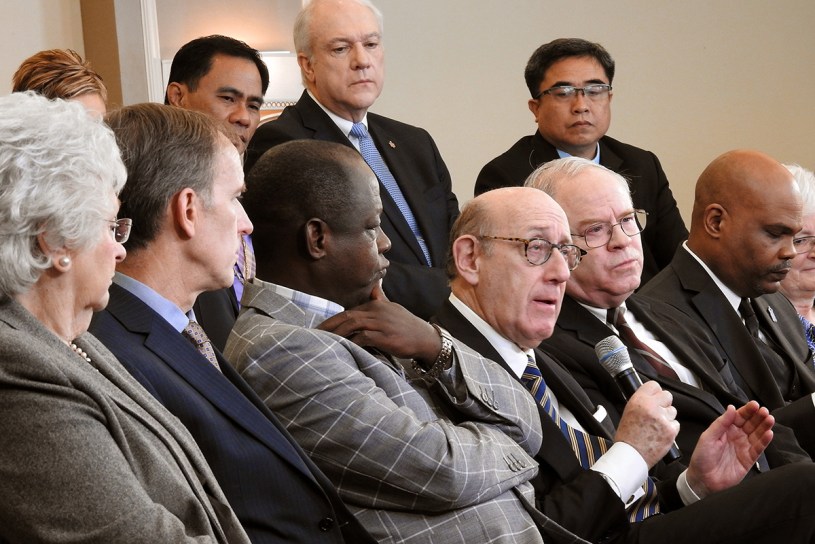
YouTuber, Global Methodist Elder, and Methodist commentator Rev. Jeffrey Rickman had a very interesting conversation recently with renown lawyer Kenneth Feinberg. I’m grateful for Mr. Feinberg spending time telling his story. I am also grateful for Jeffrey’s hard work getting it recorded and published. As mediator for a diverse group of United Methodists attempting to find freedom from one another in the wake of General Conference 2019, Feinberg may be one of the most important non-Methodists in recent Methodist history.
In the legislative proposal resulting from the negotiation, the Protocol of Grace and Reconciliation through Separation, traditionalists agreed to exit the UMC and start their own denomination. “The Protocol” set aside $25 million to fund the start-up of the new body(ies) and allowed whole annual conferences to vote themselves out of the UMC. The annual conference in which I served was a likely candidate to do just that. With the death of the Protocol, annual conference exits were off the table. Churches like the one I serve used the individual exit ramp available to them, a congregational disaffiliation process adopted at General Conference 2019.
What If?
What if the protocol had been approved? How would the resulting traditional denomination have been different for the newly formed Global Methodist Church (GMC)?
Before I answer, I want to provide my personal context. My local church lost zero members over disaffiliation. We have continued to grow and make disciples of Jesus Christ. I was able to be in the first wave of churches joining the GMC. We continue to support our legacy ministry partners such as our Wesley Foundations, Methodist Children’s Home, retreat centers, and other ministries we supported in the past. It has been our pleasure to speak to churches and other faithful Methodists about the trail we have been blazing. In my annual conference, my acting bishop (president-pro-tem) Rev. Jay Hanson has been to my church multiple times. Methodist legend Bishop Scott Jones ordained me, preached in my church, and even had coffee with me in my office. I have enjoyed serving in several leadership positions in the South Georgia Conference of the Global Methodist Church (SGA GMC).
It is difficult to envision any of this happening if the Protocol was the only way forward. If the South Georgia Conference came as a unit, it would have brought with it the legacy leadership structures. As it stands now, the Global Methodist Church in South Georgia is a coalition of the willing and invested. Certainly there are local churches and pastors who would have personally benefited from the Protocol passing. Because the South Georgia Conference of the UMC adopted a conference-level exit policy, many great preachers and leaders are still in the quagmire of discerning what to do. However, the Global Methodist Church and my new annual conference are both stronger because it did not happen.
When More is Less
With over 50% of my former annual conference choosing to disaffiliate individually from the UMC it is easy to believe there would have been enough votes for the entire conference to leave together. While I was in favor of this at the time it has become apparent this would have hampered the new South Georgia GMC. Inheriting the old conference would have swept along clergy and churches who wanted nothing to do with a theologically conservative and orthodox return to Wesleyan roots. I am not saying this as a slam on progressives, liberals, centrists, or conservative churches who have remained independent. I am saying if all these churches would have likely been lumped into the South Georgia GMC. It would have been up to the new conference to find a way forward with them. This would have taken up a tremendous amount of time and resources as well as caused significant friction in a denomination trying to define itself. This would all be true even if there was not a significant time delay from COVID. Structural and theological reform would have been a much longer process.
What is true with people is true with finances, as well. I am not sure how much of the $25 million in seed money the Global Methodist Church would have received from the Protocol. I will leave that for the legislative wonks to estimate. The reality is if we would have been given significant resources, we would have missed out on the blessing God has given us in our leaner, humbler start. There likely would have been more staff and more bureaucracy than we have now. One of the challenges for all forms of Methodism will be how to limit bureaucracy, empower laity, and embrace Wesleyan frugality. Pastor Pete Scazerro writes about embracing God’s limits. It has been a gift to embrace our limits. It has been clarifying for us to look at the limited resources we have and discern the way forward.
Conclusion
While I was strongly in favor of and optimistic about the Protocol and the possibility of my former conference staying together, I now see the considerable hardships that would have been unavoidable. In spite of the generous help of a world renown litigator (organized by a former US Senator) the Protocol’s demise may have been God’s gracious providence.
 People Need Jesus
I agree we are better off making a clean start. Some of my people have been upset that we are the ones leaving. I have tried to explain your point. We are going to leave a lot of stuff behind that would have taken time and money to get rid of.
Thank you for this perceptive and encouraging comment.
Sent from my iPhone