
by Chris Ritter
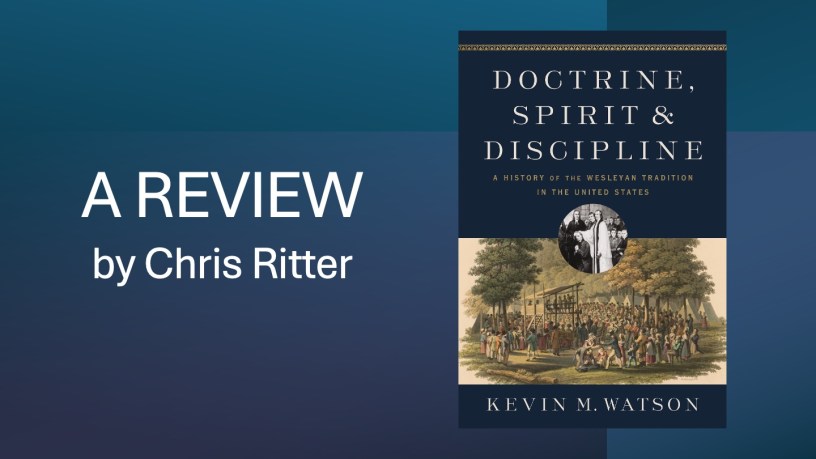
I recently finished Doctrine, Spirit, and Discipline: A History of the Wesleyan Tradition in the United States by Kevin Watson (Zondervan Academic, 2024). This expansive, one-volume history sits atop an impressive body of earlier work by the Director of Academic Growth and Formation at Asbury Theological Seminary’s Tulsa campus. Watson’s earlier work includes Pursuing Social Holiness, The Class Meeting, Perfect Love, The Band Meeting (with Scott Kisker), and Old or New School Methodism? Given Watson’s clear passion for Methodist recovery, it should come as no surprise he shapes this latest work around a clear thesis: Methodism thrives when it stays close to its original fire and suffers when it strays. Watson’s account will undoubtedly become the standard telling of Methodist history for Global Methodists.
The focus on Wesleyan doctrine sets Doctrine, Spirit, and Discipline apart from 20th Century histories of Methodism. My frustration with earlier histories is that they describe organizational developments without accounting for the move of the Holy Spirit behind it all. As a pastor, I welcome this one-volume history as an accessible reference to share with those interested in learning more about Wesleyan DNA. (My previous go-to, one-volume history was from 1938 because the most recent ones were so devoid of… Spirit.)
Watson corrects a focus on United Methodism that detracts from other branches. His accounts of Wesleyan, Nazarene, Free Methodist, Salvation Army, and African Methodist denominations will help Global Methodists find our place among the larger family that we previously had the luxury to (mostly) ignore. Those with Evangelical Brethren roots will appreciate Watson’s detailed treatment of this German Wesleyan/pietist stream.
Wesleyans are Holy Spirit people. Doctrine, Spirit, and Discipline describes the rich connection between Wesleyan and Pentecostal/Charismatic spirituality and (rightly) groups Methodists with the fastest growing stream of Christianity on the planet. I also appreciate Watson’s unflinching treatment of slavery, injustice, and the struggle of female preachers to be recognized for their gifts. Watson’s writing style is clear, measured, and appropriately repetitive.
United Methodists will notice that Watson presents the UMC as a failed experiment in theological pluralism. His final chapter, “A Tradition in Search for Its Identity” is worth the price of the entire book. As far as I know, it is the first published history of the break-up of the UMC, at least in book form. This story deserves a full volume and perhaps Watson is the one to tackle this project. I would love to see a video series based on Doctrine, Spirit, and Discipline for use in the local church.
I recommend Doctrine, Spirit and Discipline as a foundational resource for Methodists to understand our story and (as Billy Abraham put it) awaken from doctrinal amnesia. Although clearly not a theological textbook, Watson’s latest book should foster a renewed Pan-Wesleyan dialog among Wesleyan tribes interested in the project of doctrinal recovery and Spirit-driven renewal. Awareness of where we have been goes a long way in determining a faithful path forward.
 People Need Jesus
Excellent and very helpful review!